
Independent Bristol drainage engineers · Checkatrade approved
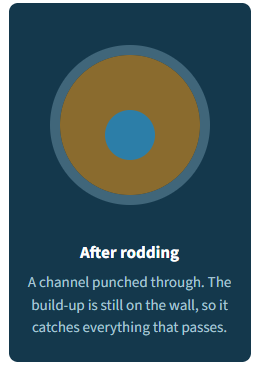
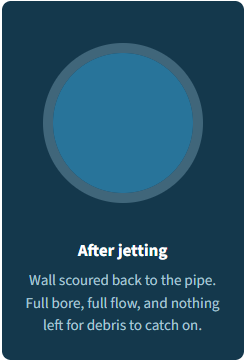
High-pressure water cuts fat, silt, scale and roots off the pipe wall and flushes them away — restoring the full bore of the drain rather than punching a channel through the middle of the blockage. That difference is why a jetted drain stays clear and a rodded one often doesn’t.
from £120
Fixed price agreed on arrival, before the machine is switched on.
Most Bristol call-outs attended today
Certificate available on request
We prove it's clear before we leave
Bristol-based, not a national chain
THE DIFFERENT
Rodding makes a hole through a blockage. Jetting removes the blockage from the pipe wall.
That sounds like a small distinction and it isn’t. When a drain is rodded clear, the fat, silt or scale that caused the problem is still lining the pipe — the bore is narrower than it should be, and everything that passes catches on what’s left. It blocks again, usually within months.
Jetting sends water back down the pipe at high pressure through a nozzle that fires rearwards. It scours the wall clean and flushes the debris back to the chamber, where it’s removed rather than pushed further along someone else’s problem.
Where roots are involved, a cutting head clears them back to the pipe wall. That’s a temporary fix on its own — the joint they came through is still open — but it buys time and it’s the necessary first step before any lining repair, because resin won’t bond to a dirty pipe.
The right tool
Six situations where jetting does something rodding can’t. We’ll tell you when it isn’t needed, too.
The commonest use. Fat coats the pipe wall in layers and rodding barely touches it. Hot high-pressure water cuts it off and flushes it out. Essential in kitchens, unavoidable in catering.
Gullies fill with grit, leaves and road silt, particularly after autumn or heavy rain. Jetting clears the gully and the run beyond it in one go.
Older cast-iron stacks and runs scale up from the inside until the bore is half what it was. Descaling with a rotating head takes it back to the metal.
A cutting head clears roots back to the pipe wall. It restores flow immediately, but the joint they entered through is still open — so this is a holding measure, not a repair.
A camera can't see through silt and a liner won't bond to a dirty pipe. Jetting is the preparation stage for both, which is why it's built into our survey and repair work.
Scheduled jetting on a grease line or a shared run in an HMO costs a fraction of an emergency call-out, and it happens when you choose rather than at 7pm on a Friday.
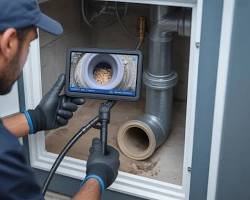
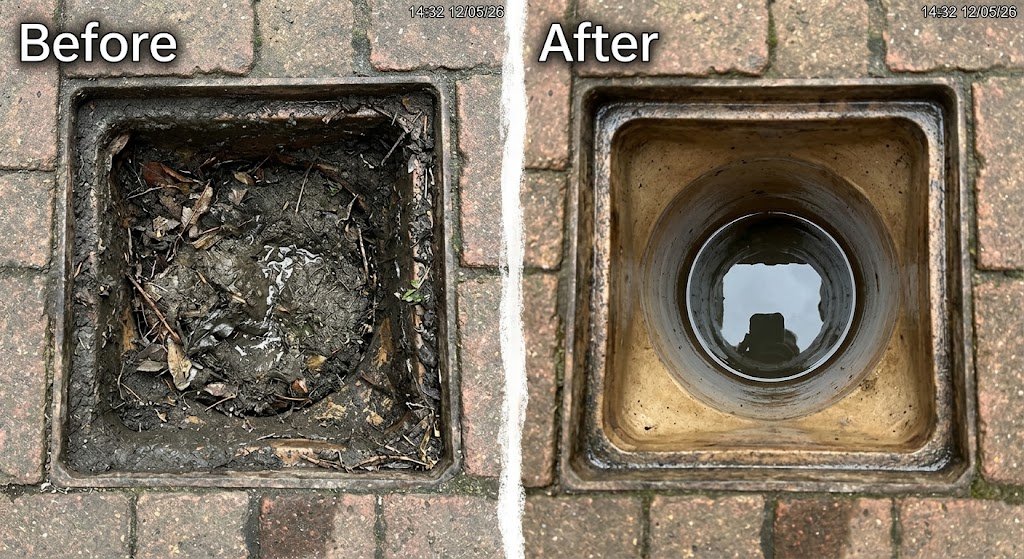
Before — bore narrowed by build-up
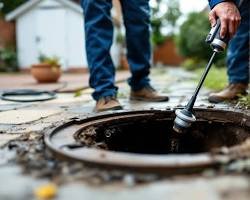
After — scoured back to the wall
On the day
The same four stages every time, in this order. If we can’t complete stage four, the job isn’t finished.
1
We find where the restriction actually is before anything gets pushed further down the pipe.
2
One fixed figure, said out loud before we start. If you’d rather not go ahead, there’s nothing to pay.
3
Mechanical clearance first — rods or an electro-mechanical machine — then jetting where the blockage needs it.
4
Flow tested while we’re still there. If there’s any doubt about why it happened, we put a camera down it and show you.
1
Tell us your postcode and what’s happening. We’ll say honestly whether it sounds like today or later in the week.
2
On site we work out where the blockage actually is, before anything gets pushed further down the pipe.
3
One fixed figure, told to you before we start. If you’d rather not go ahead, there’s nothing to pay.
4
Cleared and flow tested while we’re still there, then we explain what caused it and how to stop it happening again.
Reviews left on Google by people whose drains we’ve actually cleared.
EXCELLENT Based on 126 reviews
 Posted on Google
 Becky FrapeVery straight forward, no hidden costs, very friendly and super helpful. Highly recommend!Posted on Google
 Chris RentyTony at Flow Shure is fast to act on a drain issue and came to my support to fix a problem not just once but a second time at no extra expense 6 months later at short notice. He has provided the best service I've ever had from a tradesmen.Posted on Google
 HelenThis is the second time SureFlow have come to my rescue, as ever, quick, efficient - gets the job done, what more do you need?!Posted on Google
 Adam RiderGreat service and quickly got our slow draining shower sorted - thank you 👍Posted on Google
 Janet AdamsAntony was very prompt, efficient, and friendly. The problem was sorted very quickly.Posted on Google
 VICKI whittalAttended on time and solved the drainage issue promptlyPosted on Google
 Laura ChapmanResponsive, timely and clear communication throughout. Quick appointment and efficiently sorted the problem. Would use again and would recommend.Posted on Google
 Katherine LauQuick service and professional.Posted on Google
 Birsen OskayWe reached a solution very quickly. It was a professional job; thank you. I recommend it to everyone.
No surprises
It depends on what the pipe serves, not where the problem shows up.
Most complaints about drainage companies come down to the same thing: nobody said what it would cost until the work was already done. We do it the other way round.
FROM
We won’t quote a firm figure over the phone for a job we haven’t seen — but we’ll tell you what’s likely and what would push it higher.
Commercial
If your drains block during service, the cost isn’t the call-out. It’s the hours you’re shut.
Commercial kitchens produce fat continuously, and no amount of care at the sink prevents it building on the pipe wall. Bristol’s Gloucester Road, Whiteladies Road, Park Street and the Harbourside all run on kitchen drainage that was never designed for the volume now going through it.
The same applies to converted properties and HMOs, where one original drain now serves four or five kitchens and bathrooms. Shared runs block more often and affect more people when they do.
Scheduled jetting is the answer to both. A quarterly or six-monthly visit on a known grease line costs a fraction of an emergency attendance, and it happens at 8am on a Tuesday rather than mid-service on a Saturday.
Premises
Typical jetting interval
Busy restaurant or takeaway
Every 3 months
Café or pub kitchen
Every 6 months
HMO or converted flats
Every 6–12 months
Office or retail unit
Annually, or as needed
Domestic property
Only when there’s a reason to
Indicative intervals. What you actually need depends on volume, pipe run and history — we’d set it after the first visit, not before.
Being straight with you
Jetting is the right tool for build-up. It is not a repair, and anyone selling it as one is taking your money twice.
If the pipe has lost its shape, no amount of pressure restores it. That’s a repair job.
The lip catching debris is structural. Jetting clears what’s caught on it; the lip is still there tomorrow.
Water sits because the gradient is wrong. Clean it today, silt settles again next month. The profile has to be corrected.
If a drain has blocked repeatedly, we put a camera down before jetting it again. A survey costs less than three more clearances.
Coverage
Each area page covers what we actually find in that part of the city — the property stock, the pipework and the problems that come with them. Drains don’t follow postcode boundaries and neither do we, so if you’re just outside this list, call anyway.
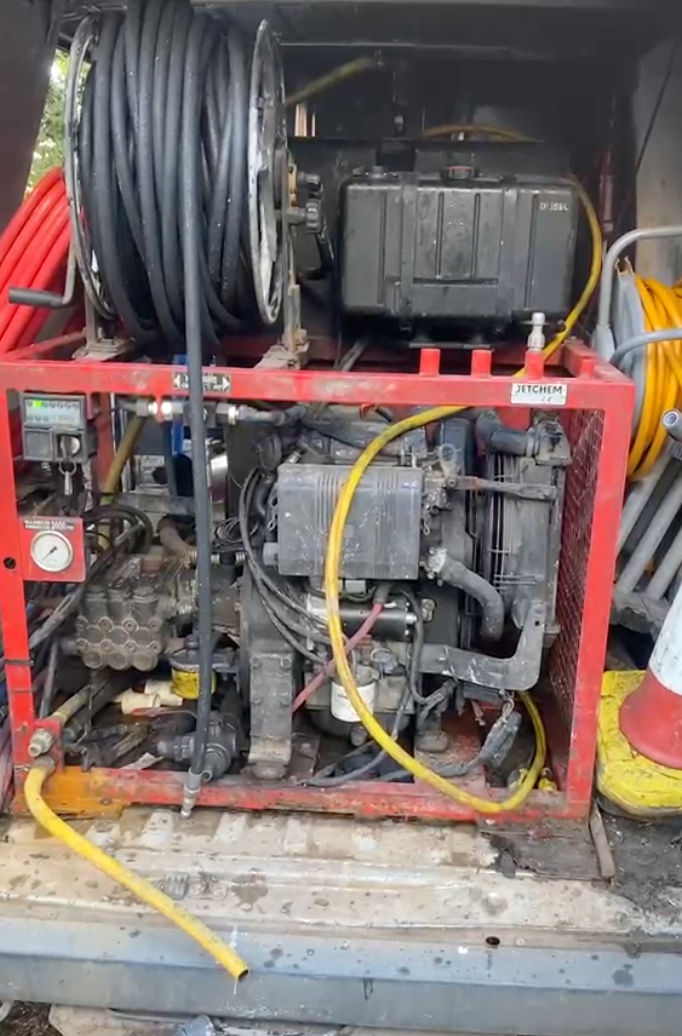
Our own jetting and CCTV equipment — nothing subcontracted.
Straight answers
Domestic jetting starts from £120 and commercial work from £160, fixed on arrival before the machine is switched on. There’s no call-out fee and no weekend premium.
Length of run, number of runs, chamber access and what’s actually in the pipe are what move the price.
Usually, yes. Same-day attendance is most of what we do across Bristol and Bath. You’ll be given a realistic arrival window when you call — [2 to 4 hours] in most cases — and if we’re running behind you’ll hear from us.
Not when the pressure and nozzle are matched to the pipe. Victorian clay, corroded cast iron and modern plastic all behave differently, which is why we assess the pipe before setting up.
Damage happens when someone jets an already-failing pipe at full pressure without checking. If a run looks fragile we survey it first rather than risk turning a crack into a collapse.
One to two hours for a typical domestic run including setup, jetting and flow testing. Commercial grease lines and multi-run sites take longer and are quoted after a site visit.
A busy restaurant or takeaway typically needs it every three months, a café or pub kitchen every six, and HMOs or converted flats every six to twelve. Offices and retail units are usually annual.
These are starting points rather than rules — the right interval depends on volume, pipe run and history, and we’d set it after seeing the first visit.
A cutting head clears roots back to the pipe wall and restores flow immediately. But the joint they came through is still open, so they grow back.
Root cutting is a holding measure. The permanent answer is sealing the joint, usually by lining the section.
A one-off blockage from something identifiable — wipes, a toy, a build-up near a plughole — usually just needs clearing.
Jetting earns its cost where there’s build-up on the pipe wall: kitchens, silted gullies, scaled cast iron, or any drain that keeps blocking in the same place.
Yes, at appropriate pressure. Most of central and north Bristol is jointed Victorian clay and we jet it routinely — but it’s assessed first and worked at a lower pressure than modern plastic would take.
Where a pipe is already cracked or displaced, we’d survey before jetting rather than after.
Related
If it's blocked right now, clearance comes first. Jetting follows where the blockage is build-up rather than a one-off obstruction.
If a drain keeps blocking despite jetting, something structural is holding it. A camera finds out what, and you keep the footage.
Where jetting can't fix it — collapses, displaced joints, poor fall — repair from inside the pipe, usually without digging.
We’ll tell you whether it needs jetting, clearing or looking at properly — and we’ll say when it doesn’t need us at all.