



Drain Cleaning in Bristol – The Complete Homeowner’s Guide to Keeping Your Drains Flowing Freely
Looking for professional drain cleaning in Bristol? Discover how drains become blocked, why regular cleaning matters, warning signs to watch for and when professional drain jetting is the best solution.
Drain Cleaning in Bristol: Why Waiting Usually Costs More Than Acting Early
Most people don’t think about their drains until something goes wrong.
It’s understandable. Your drainage system is hidden beneath your home, driveway or garden, quietly carrying away wastewater every day without asking for attention. Unlike a boiler or a roof, drains rarely give obvious warning signs until a problem has already developed.
Yet after years of working on drainage systems throughout Bristol, we’ve found that many expensive drainage problems don’t begin with a sudden blockage. They start with a gradual build-up that develops over months or even years.
A kitchen sink that empties a little slower than it used to.
A shower tray that occasionally holds water.
An outside gully that smells unpleasant during warm weather.
A toilet that needs a second flush every now and then.
Individually these issues might seem insignificant. Collectively they often indicate that your drainage system is beginning to struggle.
Professional drain cleaning isn’t simply about removing an existing blockage. Done correctly, it’s preventative maintenance that restores the internal diameter of the pipework, improves flow rates and helps identify developing issues before they become major repairs.
For homeowners and businesses across Bristol, that can mean the difference between a straightforward maintenance visit and dealing with overflowing drains, sewage backing up into the property or extensive excavation work.
What Is Drain Cleaning?
The phrase “drain cleaning” is often misunderstood.
Many people imagine someone pouring chemicals into a drain or pushing a set of rods through a blockage.
Modern professional drain cleaning is considerably more sophisticated.
Depending on the condition of the drainage system, it may involve:
- High-pressure water jetting to remove grease, sludge and debris
- Mechanical root cutting where tree roots have entered pipework
- Removal of compacted silt and sediment
- Descaling older pipework affected by mineral deposits
- Cleaning inspection chambers and gullies
- CCTV drain inspections to confirm the pipe is fully clear
- Preventative maintenance for commercial drainage systems
The objective isn’t simply to create a small opening through the blockage.
The objective is to restore the pipe to as close to its original carrying capacity as possible.
That distinction matters.
Many temporary “unblocking” methods create a narrow channel through accumulated debris. Water begins flowing again, giving the impression that the problem has been solved. In reality, much of the build-up remains attached to the pipe walls, ready to trap fresh debris within weeks or months.
Professional high-pressure jetting removes the deposits rather than simply punching a hole through them.
Why Bristol Properties Experience Drain Problems
Every town develops its own drainage characteristics.
Bristol presents a particularly varied picture because of its age, geography and mix of property types.
Victorian terraces, Georgian townhouses, modern developments, converted warehouses, commercial premises and rural properties all exist within a relatively small area. Many are connected to drainage infrastructure that has evolved over more than a century.
That means no two drainage systems are exactly alike.
Older Clay Drainage Systems
Many older areas of Bristol still contain sections of traditional clay drainage pipe.
Although clay pipework can last for decades, joints may become vulnerable over time.
Small gaps can develop.
These gaps provide the perfect opportunity for tree roots seeking moisture.
Once roots enter the pipe, they continue growing inside the drainage system, trapping toilet paper, wipes, grease and other debris until recurring blockages become inevitable.
Kitchen Grease Build-Up
One of the most common causes of slow drains in Bristol homes isn’t structural damage at all.
It’s cooking fat.
Fats, oils and grease are often poured into sinks while still warm and liquid.
As they cool inside underground pipework they solidify, creating a sticky coating along the internal wall of the drain.
Every small food particle passing through the system begins sticking to that coating.
Over time the pipe gradually becomes narrower.
Flow rates reduce.
Eventually the restriction becomes large enough for a complete blockage to develop.
The frustrating part is that this process usually happens so gradually that homeowners don’t notice until significant build-up already exists.
Leaves, Moss and Organic Debris
Bristol’s mature trees are one of the city’s greatest assets.
They also contribute significantly to seasonal drainage problems.
Autumn leaf fall, roof moss and organic debris frequently wash into external gullies and surface water drainage systems during periods of heavy rain.
Without periodic cleaning these materials accumulate inside gullies, inspection chambers and connecting pipework.
During intense rainfall the reduced capacity can quickly result in standing water and localised flooding.
Wet Wipes and Non-Flushable Products
Despite improvements in public awareness, wipes remain one of the leading causes of domestic drain blockages.
Products marketed as “flushable” frequently behave very differently once inside real drainage systems.
Unlike toilet tissue, many wipes retain their strength after becoming saturated.
Instead of breaking apart, they catch on small imperfections within the pipework.
Once one wipe becomes trapped, others quickly follow.
Grease then binds the entire mass together.
What began as a single wipe can eventually develop into a substantial obstruction affecting the entire drainage run.
The Warning Signs That Your Drains Need Cleaning
Many drainage problems announce themselves long before a complete blockage occurs.
Recognising these early warning signs often prevents more expensive repairs later.
Slow-draining sinks
If water remains in your sink noticeably longer than it used to, internal build-up has probably already begun restricting flow.
Persistent drain odours
Unpleasant smells often indicate organic material trapped inside the drainage system rather than a complete blockage.
Removing the accumulated material usually eliminates the odour.
Gurgling noises
Air trapped by partial restrictions frequently causes toilets, sinks and showers to gurgle.
These sounds should never be dismissed if they occur repeatedly.
Water backing up externally
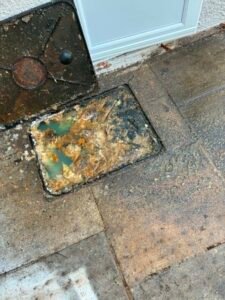
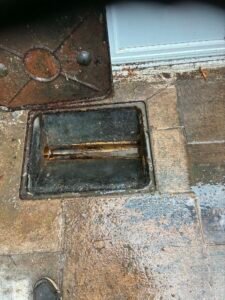
An outside inspection chamber or gully containing standing water almost always indicates restricted flow somewhere downstream.
Recurring blockages
Perhaps the clearest sign of all.
If you have successfully “cleared” the same drain several times, the underlying cause almost certainly remains.
Professional investigation becomes far more cost-effective than repeatedly treating the symptoms.
Why Chemical Drain Cleaners Often Make Things Worse
Supermarket drain cleaners promise quick results.
Sometimes they appear to work.
Unfortunately they also create several problems.
They rarely remove the underlying accumulation completely.
Some generate significant heat which may damage certain pipe materials if used repeatedly.
They can make subsequent maintenance unpleasant and potentially hazardous because chemicals may still be present when a drainage engineer begins work.
Most importantly, they encourage homeowners to delay investigating the real cause of recurring drainage issues.
Professional drain cleaning addresses the source of the problem rather than attempting to dissolve part of the symptom.
Why High-Pressure Water Jetting Has Become the Industry Standard
Professional drain jetting works on an entirely different principle.
Instead of relying on chemicals, highly pressurised water is directed through specialist nozzles designed to clean the full circumference of the pipe.
The water doesn’t simply push debris forward.
It strips grease, sludge, scale and soft deposits from the pipe walls while flushing them safely downstream.
The result is a significantly cleaner drainage system with improved hydraulic performance and a much lower likelihood of immediate recurrence.
For many domestic drainage problems, high-pressure water jetting provides the most effective combination of thorough cleaning, speed and minimal disruption.
CALL FLOW SURE DRAINS 0117 427 4565