
Independent Bristol drainage engineers · Checkatrade approved
Don’t flush it again. If the bowl is already high, a second flush is what turns a blocked toilet into a bathroom floor you have to clean. We attend across Bristol and Bath the same day, agree a fixed price before we start, and never charge a call-out fee.
One toilet in the house? Tell us when you call — we’ll prioritise it.
Fixed price agreed on arrival. Nothing to pay if you’d rather not go ahead.
1. Stop flushing. Testing it again is the single most common way a blocked toilet becomes a flooded bathroom. If the water is high, it has nowhere to go.
2. Stop using water elsewhere. No showers, no washing machine, no dishwasher. If the blockage is downstream of the toilet, everything you run adds to what’s coming back up.
3. Don’t pour chemicals down. They rarely clear a real blockage, they can damage older pipework, and they make the job hazardous for whoever opens it up. If you already have, please tell us when we arrive — it changes how we work safely.
Most Bristol call-outs today
The bathroom is left clean
The pan comes off only as a last resort
Bristol-based, not a call centre
The usual suspects
Toilets show the first symptoms of almost any drainage problem, because they need clear flow to work at all. Sometimes the toilet is the problem. Often it’s the messenger.
The single commonest cause we attend. "Flushable" wipes don't break down like paper — they catch on a joint or a root and then collect everything that follows. Baby wipes, cleaning wipes and cosmetic wipes are all the same problem.
Designed to absorb and expand, which is exactly what you don't want inside a 100mm pipe. Cotton buds and dental floss are worse than they look — they form a mesh that everything else sticks to.
Common in households with small children, and in properties with a low-flush or older cistern that doesn't shift a full load. Usually clears easily — but if it happens repeatedly, the cistern or the fall is worth looking at.
Toys, air fresheners, phones, toothbrushes. If you know something went down, say so when you call — it changes the approach completely, and it's much easier to retrieve than to break up.
The toilet isn't blocked at all — the main run is, and the toilet is simply the lowest point showing it. If the outside gully is also holding water, this is what you're dealing with.
If the same toilet blocks repeatedly, something in the run is catching everything that passes — roots through a joint, a displaced section or poor fall. Clearing it again treats the symptom.
Work it out
Check whether anything else in the house is affected. That one question decides what you’re dealing with.
1
Sinks, bath and shower all draining normally? The blockage is in or just below the pan. Usually a straightforward clearance.
2
Slow sinks, a gurgling bath, or water rising in the shower when the toilet is flushed? The problem is the main drain, not the toilet. Stop using water and call.
If you can lift the cover on the inspection chamber outside and it’s standing full, that confirms it — the restriction is underground, downstream of the house. That’s a blocked drain rather than a blocked toilet.
On the day
Least invasive first, always. Taking the pan off is a last resort, not a starting point.
1
Is it the pan, the soil pipe, or the main run? We check the other fixtures and the chamber outside before touching the toilet.
2
Sheeting down, boot covers on. Bathrooms are small and what’s in the pipe isn’t pleasant — containing it is part of the job.
3
Plunging, then an auger or closet rod. Jetting from the chamber where the blockage is further along. The pan only comes off if nothing else reaches it.
4
Flushed and tested properly while we’re there, the area disinfected, and everything taken away. Then we tell you what caused it.
1
Tell us your postcode and what’s happening. We’ll say honestly whether it sounds like today or later in the week.
2
On site we work out where the blockage actually is, before anything gets pushed further down the pipe.
3
One fixed figure, told to you before we start. If you’d rather not go ahead, there’s nothing to pay.
4
Cleared and flow tested while we’re still there, then we explain what caused it and how to stop it happening again.
Reviews left on Google by people whose drains we’ve actually cleared.
EXCELLENT Based on 126 reviews
 Posted on Google

 Becky FrapeVery straight forward, no hidden costs, very friendly and super helpful. Highly recommend!Posted on Google
 Chris RentyTony at Flow Shure is fast to act on a drain issue and came to my support to fix a problem not just once but a second time at no extra expense 6 months later at short notice. He has provided the best service I've ever had from a tradesmen.Posted on Google
 HelenThis is the second time SureFlow have come to my rescue, as ever, quick, efficient - gets the job done, what more do you need?!Posted on Google
 Adam RiderGreat service and quickly got our slow draining shower sorted - thank you 👍Posted on Google
 Janet AdamsAntony was very prompt, efficient, and friendly. The problem was sorted very quickly.Posted on Google
 VICKI whittalAttended on time and solved the drainage issue promptlyPosted on Google
 Laura ChapmanResponsive, timely and clear communication throughout. Quick appointment and efficiently sorted the problem. Would use again and would recommend.Posted on Google
 Katherine LauQuick service and professional.Posted on Google
 Birsen OskayWe reached a solution very quickly. It was a professional job; thank you. I recommend it to everyone.
No surprises
There’s no call-out fee, and no extra for evenings, weekends or bank holidays — a toilet blocking on a Sunday isn’t a reason to charge more for it.
FROM
Landlords and letting agents: we can attend and invoice without you needing to be there.
Prevention
Almost every blocked toilet we attend was caused by something on the right-hand list. It’s a short list, and it’s the whole of prevention.
Pee, poo and paper. That’s genuinely the whole list.
Toilet paper is designed to break apart in water within seconds. Nothing else in a bathroom is — which is why everything else belongs in a bin, however the packaging describes it.
Wipes of any kind, including ones labelled flushable — there is no UK standard behind that word.
Sanitary products, nappies and cotton wool. Designed to expand when wet.
Cotton buds and dental floss. They form a mesh that catches everything else.
Kitchen roll and tissues. Made to hold together when wet, unlike toilet paper.
Fats, oils and food waste down any drain in the house — that’s what causes the blockage the toilet later reports.
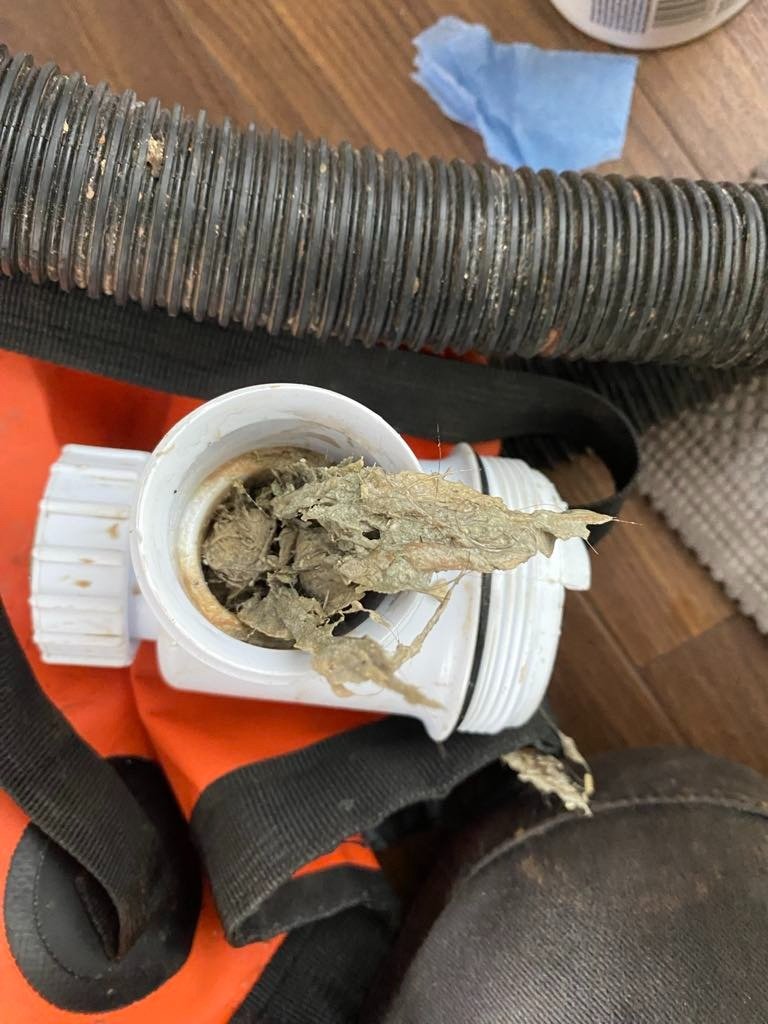
A typical afternoon’s work — nearly all of it labelled “flushable”.
Coverage
We attend across Bristol, Bath and the surrounding towns — houses, flats, HMOs and commercial premises. Landlords and letting agents: we can attend and invoice without you being on site.
Straight answers
Stop flushing it. If the water is already high, another flush is the most common way a blocked toilet becomes a flooded bathroom.
Stop using water elsewhere in the property too, and don’t pour chemical drain cleaner down. If you’ve already used one, tell us when we arrive — it changes how we approach the job safely.
A standard clearance starts from £95, fixed on arrival before work begins. No call-out fee, and no extra for evenings, weekends or bank holidays.
If the pan has to come off to reach the blockage, that’s quoted separately and only if there’s genuinely no other way.
Usually, yes — and if it’s the only toilet in the property, say so when you call and we’ll prioritise it. You’ll be given a realistic arrival window, typically [2 to 4 hours].
Check the other fixtures. If sinks, bath and shower are all draining normally, the blockage is in or just below the pan. If they’re slow, gurgling, or water rises when you flush, the main run is blocked and the toilet is just showing it first.
An inspection chamber standing full outside confirms it — that’s a blocked drain rather than a blocked toilet.
No, in any practical sense. There is no UK standard behind the word, and wipes don’t break apart in water the way toilet paper does. They catch on a joint or a root and then collect everything that follows.
Wipes are the single commonest cause of blocked toilets we attend. Bin them.
Rarely, on a genuine blockage. They may shift a light build-up near a plughole but won’t clear wipes, roots, silt or a broken pipe, and they can damage older pipework.
If you’ve already used one, please tell us when we arrive — it changes how we approach the job safely.
Yes. We sheet the area before starting, disinfect afterwards, and take everything away. The bathroom is left clean — that’s part of the job, not an extra.
Either something is still in the run catching everything that passes — roots through a joint, a displaced section, or a pipe laid at the wrong gradient — or the cistern isn’t delivering enough flush volume to shift a normal load.
If it’s happened more than twice in the same place, a CCTV survey finds the actual cause rather than treating it again.
Related
If other fixtures are affected or the chamber outside is full, the main run is blocked and the toilet is simply reporting it.
Slow-draining fixtures elsewhere in the bathroom usually point to the same run — or to a separate waste pipe problem.
For a toilet that blocks repeatedly, a camera finds what's holding it — and you keep the footage.
Postcode, and whether anything else in the house is affected. That’s enough for us to know what we’re coming to.