- Home
- Drainage services
- Sinks, baths & showers
Blocked sinks, baths and showers in Bristol
Slow-draining or standing water indoors, cleared the same day — without dismantling half the bathroom or leaving the mess behind. Fixed price agreed on arrival, no call-out fee, and the same price at weekends.
Tell us which fixtures are affected — that alone usually tells us what we’re coming to.
The short answers
Standard clearance
from £120 no VAT to pay
Call-out fee
Typical arrival
- Most jobs take
- Mess
Nothing to pay if you’d rather not go ahead once you’ve heard the price.
Same-day response
Most Bristol call-outs attended today
Nothing dismantled
Units and tiling stay where they are
We clear the mess
Sheeted, disinfected, taken away
Local and independent
Bristol-based, not a call centre
Work it out first
One fixture, or several?
This is the only question that matters before anyone touches anything, and you can answer it in about a minute.
Run every tap, bath and shower in the property. If only one is slow, the problem is local. If several are, it isn’t.
1
Only one fixture is slow
The blockage is in that fixture's own trap or waste pipe — usually within a metre or two of the plughole. Straightforward, quick, and cheap to clear.
2
Two or more are slow
They share a run, and the restriction is in the part they share — the soil stack or the main drain. Clearing the individual traps won't touch it.
If the ground-floor fixtures are worst, or water rises in the shower when the toilet is flushed, it’s almost certainly the main run. That’s a blocked drain, and it needs stopping straight away — don’t keep running water into it.
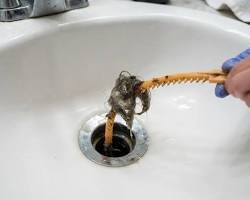
By fixture
What blocks each one, and why
Same job, different cause. Knowing which you have tells us what to bring.
Blocked sinks
Kitchen sinks block for one reason above all others: fat. Oil and grease go down warm and liquid, then cool on the pipe wall and harden. Each wash adds another layer until the bore is narrow enough to catch food waste, and then it stops altogether.
It builds up slowly, which is why a kitchen sink is usually “a bit slow” for weeks before it blocks completely. If yours is draining slowly now, that’s the warning rather than the problem.
Bathroom basins are different — soap scale and toothpaste rather than fat, often combined with hair. Basin traps are small and block faster, but they’re also the easiest thing on this page to clear.
The thing most people miss: if the kitchen sink and the utility or washing machine both drain slowly, they share a run and the fat is further along than the trap. That needs jetting, not plunging.
Blocked baths
Baths block on hair bound together with soap. Hair alone would pass; soap scale is what turns it into a mat that sits across the trap and catches everything after it.
Bath traps are shallow and awkward to reach — often behind a panel, sometimes with no access at all. That’s why bath blockages are more often cleared from the waste pipe with an auger than by taking the trap apart.
If the water drains but leaves a tidemark or drains far more slowly than it used to, the trap is partly restricted rather than blocked. Worth clearing before it becomes standing water.
Older Bristol properties: Victorian and Edwardian houses often have long, shallow-fall bath wastes running to an external stack. They silt up more readily than modern installations, and they benefit from clearing further along the run rather than just at the trap.
Blocked showers
Showers are the same problem as baths, in a smaller and less forgiving space. Hair and soap again, but shower traps are shallower, the fall is often minimal, and standing water shows up immediately because there’s nowhere for it to go.
Walk-in and wet-room installations are the tricky ones. The trap sits under the tray or the floor, access is through a small removable grate, and there’s no panel to take off. Clearing these properly needs the right tool rather than force — a wrong move cracks a tray or breaks a seal, and that’s a much bigger bill than the blockage was.
Electric showers with a separate waste can also block at the pump or the outlet rather than the trap, which is a different fix again.
Standing water in a shower is worth treating quickly. Beyond the nuisance, water sitting against a tray seal or a wet-room membrane is how a blockage turns into a leak through the ceiling below.
Before you try it
Why chemical drain cleaners rarely work
- Doesn't work
It sits above the blockage
If the pipe is already full of standing water, the cleaner never reaches the obstruction — it dilutes and sits there instead.
- Doesn't work
It can't shift hair mats or fat
It may soften the surface of a soap and hair mat. It won’t dissolve one, and it does nothing meaningful to a hardened fat line.
- Can cause harm
It damages older pipework
Repeated use attacks older plastic and metal wastes, and can degrade trap seals. Bristol has a lot of pipework old enough to care about.
- Please tell us
If you've already used one
Say so when we arrive. Caustic water in a trap is a genuine hazard for whoever opens it — it changes how we work, not whether we will.
Boiling water and a plunger are worth a try on a slow kitchen sink before calling anyone, and we’d rather tell you that than take money for a job you could have done yourself. If that doesn’t shift it, the blockage is beyond the trap.
On the day
What we do when we arrive
Least invasive first. Nothing gets taken apart that doesn’t have to be.
1
Check every fixture
One slow fixture or several? That decides whether this is a trap job or a main-drain job, and it’s answered before anything is opened.
2
Protect the room
Sheeting under the unit, towels down, boot covers on. What comes out of a trap is not something you want on a bathroom floor.
3
Clear it
Trap off and cleaned where accessible, an auger down the waste where it isn’t, or jetting from outside if the restriction is further along the shared run.
4
Test and tidy
Run it properly to confirm full flow, check for leaks at any joint we’ve opened, disinfect and take everything away.
1
You call us
Tell us your postcode and what’s happening. We’ll say honestly whether it sounds like today or later in the week.
2
We find the problem
On site we work out where the blockage actually is, before anything gets pushed further down the pipe.
3
We agree the price
One fixed figure, told to you before we start. If you’d rather not go ahead, there’s nothing to pay.
4
We clear and prove it
Cleared and flow tested while we’re still there, then we explain what caused it and how to stop it happening again.
What Bristol customers say
Reviews left on Google by people whose drains we’ve actually cleared.
EXCELLENT Based on 126 reviews
 Posted on Google

 Becky FrapeVery straight forward, no hidden costs, very friendly and super helpful. Highly recommend!Posted on Google
 Chris RentyTony at Flow Shure is fast to act on a drain issue and came to my support to fix a problem not just once but a second time at no extra expense 6 months later at short notice. He has provided the best service I've ever had from a tradesmen.Posted on Google
 HelenThis is the second time SureFlow have come to my rescue, as ever, quick, efficient - gets the job done, what more do you need?!Posted on Google
 Adam RiderGreat service and quickly got our slow draining shower sorted - thank you 👍Posted on Google
 Janet AdamsAntony was very prompt, efficient, and friendly. The problem was sorted very quickly.Posted on Google
 VICKI whittalAttended on time and solved the drainage issue promptlyPosted on Google
 Laura ChapmanResponsive, timely and clear communication throughout. Quick appointment and efficiently sorted the problem. Would use again and would recommend.Posted on Google
 Katherine LauQuick service and professional.Posted on Google
 Birsen OskayWe reached a solution very quickly. It was a professional job; thank you. I recommend it to everyone.
No surprises
What it costs
A blocked sink, bath, or shower in Bristol starts from £120, no VAT to pay, fixed on arrival before any work begins.
Internal blockages are usually the cheapest job we do — most are cleared inside an hour. The price only changes if it turns out the restriction is in the main drain rather than the fixture, and we’d tell you that before doing anything about it.
- No call-out fee, and nothing to pay if you'd rather not proceed
- The same price at weekends, evenings and bank holidays
- Several slow fixtures cleared on one visit rather than charged separately
- A 12 month free call back subject to no defects on pipework and customer maintaining pipework
FROM
£120 no VAT to pay
Landlords and letting agents: we can attend and invoice without you needing to be there.
Prevention
How to stop it happening again
Four habits that between them prevent most of the internal blockages we attend. None of them cost anything.
Never pour fat down the sink
Not with hot water, not with washing-up liquid. It travels a few metres and cools regardless. Let it set and bin it, or keep a jar under the sink for it.
Use a plughole strainer
A few pounds in any hardware shop. Catches hair in the bath and shower before it reaches the trap, and it's the single most effective thing on this list.
Flush kitchen wastes weekly
A kettle of very hot water down the kitchen sink once a week keeps a fat line from establishing. Cheap, quick, and genuinely effective.
Act on "a bit slow"
Slow draining is a partial blockage announcing itself. Dealt with then, it's a five-minute job. Left alone, it becomes standing water and a call-out.
Nothing solid down any waste
Coffee grounds, rice, pasta and cotton wool all swell or settle. So does the contents of a food-waste caddy tipped into the sink "just this once".
If it keeps coming back, look
A fixture that blocks repeatedly has something structural behind it — poor fall, a badly fitted waste, or a fault on the shared run. Clearing it again treats the symptom.
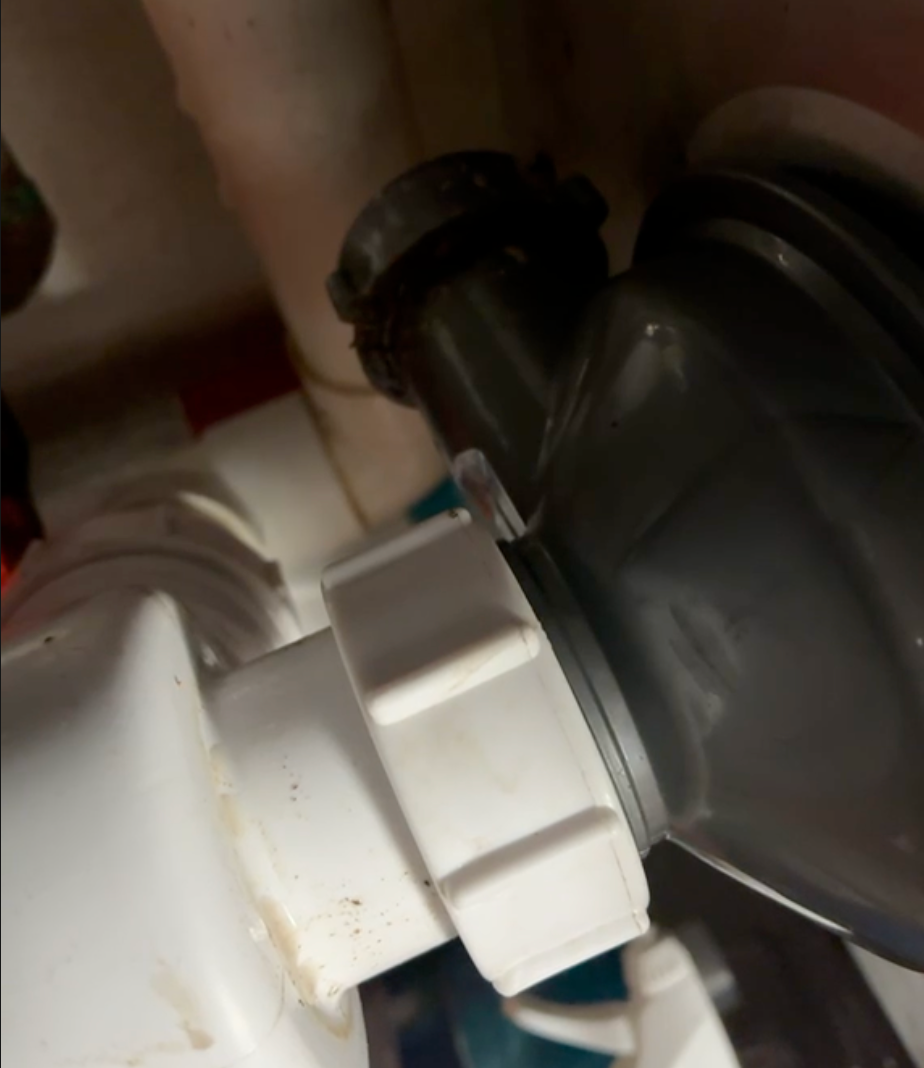
Sheeting down before anything comes apart.
Coverage
Internal blockages by area
We attend across Bristol, Bath and the surrounding towns — houses, flats, HMOs and commercial premises. Landlords and agents: we can attend and invoice without you being on site.
Straight answers
Common questions
How much does it cost to unblock a sink, bath or shower?
From £120 no VAT to pay in Bristol, fixed on arrival before any work begins. There’s no call-out fee and no weekend or evening premium.
Internal blockages are usually the cheapest job we do — most are cleared inside an hour. If several fixtures are affected we clear them on one visit rather than charging separately.
Only one sink is slow. Is that different from several?
Completely. One slow fixture means the blockage is in its own trap or waste pipe, within a metre or two of the plughole. Quick and cheap to clear.
Several slow fixtures means they share a run and the restriction is in the shared part — the stack or the main drain. Clearing the individual traps won’t touch it.
Do chemical drain cleaners work on a blocked sink?
Rarely. If the pipe is already full of standing water the cleaner never reaches the blockage. It may soften the surface of a hair and soap mat but won’t dissolve one, and it does nothing to a hardened fat line.
Repeated use can also damage older pipework and trap seals. If you’ve already used one, tell us on arrival — caustic water in a trap is a hazard for whoever opens it.
Can I try anything myself first?
Yes, and we’d rather you did than pay us for something you could do in five minutes. A kettle of very hot water followed by a plunger is worth a go on a slow kitchen sink.
If that doesn’t shift it, the blockage is beyond the trap and needs a tool rather than pressure.
Will you have to take the bathroom apart?
No. Traps are cleared where accessible, and where they aren’t we work down the waste pipe with an auger instead. Panels, units and tiling stay where they are.
Wet rooms and walk-in showers need particular care because the trap sits under the tray — but that means the right tool, not dismantling anything.
Why does my shower keep blocking?
Almost always hair bound together with soap scale, and shower traps are shallow enough that it takes very little to restrict them. A plughole strainer prevents most of it.
If it recurs despite that, the fall on the waste may be inadequate or the trap poorly fitted — which is worth looking at properly rather than clearing every few months.
Is standing water in a shower urgent?
More than people assume. Beyond the nuisance, water sitting against a tray seal or a wet-room membrane is how a blockage becomes a leak through the ceiling below. It’s worth dealing with in days rather than weeks.
What if it turns out to be the main drain?
We’d tell you before doing anything about it, and before the price changes. If several fixtures are slow, or the chamber outside is standing full, it’s a blocked drain rather than a blocked fixture.
Stop running water into it in the meantime — everything you use adds to what’s backing up.
Related
If it's more than one fixture
Blocked drain clearance
Several slow fixtures, or an inspection chamber standing full outside, means the main run is blocked rather than the fixture.
Blocked toilets
If the toilet is affected as well, that usually confirms the problem is the shared run rather than any one fixture.
Drain jetting & cleaning
Where a fat line has built up along a kitchen waste run, jetting removes it from the pipe wall instead of punching through it.
Tell us which fixtures are slow
Postcode, and whether it’s one fixture or several. That’s genuinely enough for us to know what we’re coming to and what to bring.