- Home
- Drainage services
- Rats in drains
Rats in drains, Bristol
If rats are getting into your home or garden, the route in is almost always a defect in the drain — a cracked pipe, a displaced joint, or an old branch left open when something was converted. We find it with a camera, seal it, and they stop coming.
We’re not pest controllers. We deal with the way in — which is the part that keeps failing.
The short answers
- CCTV survey
- from £160 no VAT to pay
- Sealing a defect
- Rat blocker fitted
- Call-out fee
- You keep
We’ll tell you honestly if we think the problem isn’t in the drains.
We find the actual route
Camera evidence, not guesswork
Sealed from inside
Usually without digging anything up
Report you can use
For landlords, insurers or the council
Local and independent
Bristol-based, our own equipment
The part most people miss
Why the rats keep coming back
Pest control removes the rats that are already there. It does not close the hole they came through.
Rats live in the sewer network. That’s normal, and it isn’t a problem in itself — a sound drain keeps them exactly where they are. They only reach your home when the pipe between the sewer and your property has a defect they can climb out of.
So the sequence most people go through is: bait, quiet for a few weeks, rats again. Nothing was wrong with the pest control. The route was still open, and the sewer has more rats in it.
Two jobs, two trades. A pest controller deals with the animals. We deal with the way in. If you only do one of those, you’ll be doing it again.
We’ll say plainly if we think your problem isn’t coming from the drains at all — gaps around pipework, an air brick, or a roof route are all possibilities, and none of them are ours to fix.
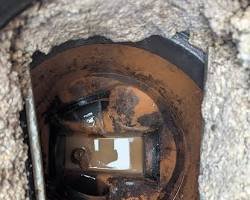
What you might be noticing
Signs the problem is your drains
Rats can enter a building several ways. These particular signs point at the drainage rather than anything else.
Noises from the toilet
Scratching or splashing from the pan, or the water moving when nothing has been flushed. Rats are strong swimmers and a toilet is a direct connection to the soil pipe.
Scratching under floors
Particularly at ground level, near a kitchen or bathroom, and worst at dusk and dawn. Under-floor voids sit directly above where a defective drain would surface.
Activity around a chamber
Runs, droppings or burrowing near an inspection chamber, gully or manhole cover, or a cover that no longer seats properly.
Burrows in the garden
Holes appearing along the line the drain runs, or beside a chamber. Rats dig alongside pipework because it's a route they already know.
Smell with no blockage
A persistent drain smell when nothing is actually blocked often means a broken pipe or dry trap somewhere — the same defect that lets rats through also lets odour out.
They came back after treatment
The clearest sign of all. If baiting worked and then stopped working, the population was removed but the access route wasn't.
The defects we find
How rats actually get in
Four faults account for nearly every drainage-related rat problem we’re called to in Bristol.
Cracked or collapsed pipe
Any break large enough to pass through is an open door. Rats can get through a surprisingly small gap and will enlarge soft ground around it.
Displaced joint
Very common in Bristol's Victorian clay. Ground movement or root growth opens the joint, and what lets roots in lets rats in.
Redundant branches left open
The classic one. A bathroom moved, an outside toilet removed, a kitchen relocated — and the old branch pipe was capped badly or not at all. It leads straight into the building.
Damaged chamber or cover
Cracked benching, failed mortar or a cover that doesn't seat. Gives access into the chamber, and from there into any pipe running off it.
All four show up clearly on camera. That’s why the survey comes first — sealing the wrong thing achieves nothing, and there’s no way to know which it is from the surface.
How we deal with it
Find it, seal it, prove it
Four stages. You end up with footage showing the defect and footage showing it closed.
1
Survey the run
A camera through every accessible run, looking specifically for breaks, open branches and damaged chambers rather than blockages.
2
Identify the route
We show you exactly where the defect is and how far along the run. If there’s more than one, you’ll see all of them.
3
Seal or repair it
Open branches capped properly, broken sections lined from inside the pipe, damaged chambers made good. Usually without digging.
4
Re-survey and confirm
A second camera run afterwards so you can see the route is closed. That footage is what you’d show a landlord, an insurer or the council.
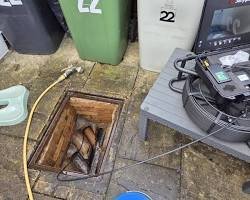
Before — an open branch nobody capped
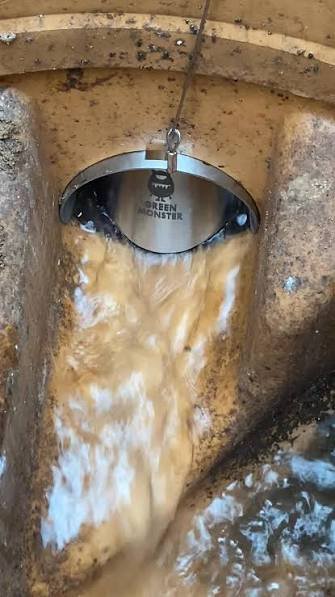
After — closed and re-surveyed
What Bristol customers say
Reviews left on Google by people whose drains we’ve actually cleared.
EXCELLENT Based on 126 reviews
 Posted on Google
 Becky FrapeVery straight forward, no hidden costs, very friendly and super helpful. Highly recommend!Posted on Google
 Chris RentyTony at Flow Shure is fast to act on a drain issue and came to my support to fix a problem not just once but a second time at no extra expense 6 months later at short notice. He has provided the best service I've ever had from a tradesmen.Posted on Google
 HelenThis is the second time SureFlow have come to my rescue, as ever, quick, efficient - gets the job done, what more do you need?!Posted on Google
 Adam RiderGreat service and quickly got our slow draining shower sorted - thank you 👍Posted on Google
 Janet AdamsAntony was very prompt, efficient, and friendly. The problem was sorted very quickly.Posted on Google
 VICKI whittalAttended on time and solved the drainage issue promptlyPosted on Google
 Laura ChapmanResponsive, timely and clear communication throughout. Quick appointment and efficiently sorted the problem. Would use again and would recommend.Posted on Google
 Katherine LauQuick service and professional.Posted on Google
 Birsen OskayWe reached a solution very quickly. It was a professional job; thank you. I recommend it to everyone.
Where sealing isn’t enough
Rat blockers
A rat blocker is a one-way flap fitted inside an inspection chamber. Waste flows out; nothing comes back up.
Sealing the defect is always the first answer, because a sound drain doesn’t need a blocker. But there are situations where a blocker is the sensible additional step:
- Where the defect is on a shared or public section you don't control
- Where there's known heavy rat activity in the wider sewer network
- On food premises, where the consequences of an incursion are severe
- As belt-and-braces after a repair, where you simply want certainty
What a blocker is not is a substitute for fixing a broken drain. Fitting one to a defective run leaves the defect there, still leaking and still deteriorating. Anyone offering a blocker without surveying first is selling you a device, not a solution.
Situation
What we’d recommend
Defect found on your own drain
Repair it. A blocker isn’t needed
Defect on a shared or public run
Report to Wessex Water, and consider a blocker meanwhile
No defect found at all
They’re getting in another way — you need a pest controller, not us
Food premises
Repair, blocker, and scheduled inspection
No surprises
What it costs
A CCTV survey to find the route in starts from £160. Sealing a defect starts from £120, and a rat blocker from £180.
The survey always comes first, because everything after it depends on what’s found. If we don’t find a drainage defect, we’ll tell you — and you’ll have spent £160 ruling out the most likely cause rather than paying for guesswork.
- No call-out fee, and the price is fixed before work starts
- Footage and a written report included, before and after
- If the defect is on a shared run, that repair may not be yours to pay for
- We won't sell you a blocker instead of a repair
from £160 no VAT to pay
Already had pest control out? Tell us what they found — it usually narrows down where to look.
Rented and commercial property
Landlords, agents and food premises
A rat problem in a rented property escalates faster than almost any other maintenance issue, and reasonably so — tenants find it distressing and environmental health takes it seriously.
The difficulty is that repeat baiting looks like action while nothing structural changes. A survey establishes whether there’s a drainage defect, produces the evidence, and gives you a repair you can point to. That’s a considerably better position than a record of three pest control visits.
For food premises the calculation is starker still. We attend outside trading hours, invoice or work to purchase orders, and provide a written report after every visit that can go straight into your due-diligence records.
We work alongside pest controllers rather than in competition with them. If you already have one, we’re happy to coordinate — they handle the animals, we handle the route, and between us the problem actually ends.
If you're a tenant
Rats getting in through a defective drain is a disrepair issue, and under section 11 of the Landlord and Tenant Act 1985 the drains serving your home are generally the landlord’s responsibility to keep in repair.
Report it in writing, and ask for a drainage survey rather than only pest control. If the landlord won’t act, Bristol City Council’s environmental health team can advise.
Coverage
Where we cover
Across Bristol and Bath. Older housing stock with jointed clay pipework tends to produce more of this work — which in this city means the Victorian and Georgian areas particularly.
Straight answers
Common questions about rats in drains
Can rats really come up through the toilet?
Yes, though it’s less common than the internet suggests. Rats swim well and can hold their breath for a few minutes, so a direct soil pipe connection is a possible route.
Far more often they leave the drain through a defect below ground and enter the building through the floor void instead. Either way the fix is the same: find the defect and close it.
Pest control keeps treating and they keep coming back. Why?
Because baiting removes the rats that are present but doesn’t close the route they used. The sewer network has plenty more, and they’ll follow the same path.
If treatment works and then stops working, that pattern is itself the evidence that there’s an open access route — usually a drainage defect.
Do you do pest control as well?
No, and we’d be wary of anyone offering both as a single package. They’re different trades with different qualifications.
We find and seal the way in. A pest controller deals with the animals. We’re happy to coordinate with whoever you’re already using.
How do you find where they're getting in?
A CCTV survey, looking specifically for breaks, open redundant branches and damaged chambers rather than blockages. You see the footage and keep it.
Uncapped branch pipes left from an old bathroom or outside toilet are the single most common finding.
Will you need to dig up my garden?
Usually not. Open branches can be capped, and broken sections can generally be lined from inside the pipe. Excavation is a last resort, for genuine collapses.
Is a rat blocker worth fitting?
Sometimes. It’s a one-way flap fitted in a chamber that lets waste out and stops anything coming back. It makes sense where the defect is on a shared or public run you don’t control, on food premises, or as extra certainty after a repair.
It is not a substitute for repairing a broken drain. Fitting one to a defective run leaves the defect there, still deteriorating.
What if you don't find anything wrong with the drains?
Then we’ll tell you, and you should speak to a pest controller about other routes — gaps around pipework, air bricks, roofline access.
You’ll have spent the survey cost ruling out the most likely cause, with footage to prove it. That’s genuinely useful information rather than a wasted visit.
Who pays if the defect is on a shared drain?
Very possibly not you. If the damaged run serves more than one property it’s likely a lateral drain, and in this area that’s normally Wessex Water’s responsibility rather than yours.
Our survey establishes what the pipe serves, so you know before anyone starts work. More on drain responsibility.
Related
What this usually involves
CCTV drain surveys
The starting point every time. Breaks, open branches and damaged chambers are only visible on camera.
Drain repairs & relining
Sealing the route in, usually from inside the pipe so nothing gets dug up.
Whose drain is it?
If the defect sits on a shared run, the repair may be Wessex Water's rather than yours.
Find out how they're getting in
Tell us what you’re hearing and where, and whether pest control has already been out. We’ll tell you whether it sounds like a drainage problem — and if it doesn’t, we’ll say so.